Why people hesitate on an IPO bid
People were dropping out between browsing an IPO and applying for it. This research looked at why, using drop-off data, phone calls and screen-shared sessions.
First draft. Built from the OneUp slides in the Figma file. Still to confirm: the study date (the slide footers say September 2021, but the resume puts the start at IIFL in May 2022 and one screen shows a June 2022 date), Shashwita's own part in the study, what the percentages on the slides count (denominators), what changed afterwards, and whether the slides, quotes and IIFL screens may be shown publicly. Remove this note before publishing.
At a glance
- Organisation
- IIFL Securities
- Product
- OneUp, the IPO and bond section inside the IIFL Markets app
- When
- To be confirmed
- My role
- UX researcher, IIFL (exact tasks to be confirmed)
- Methods
- Funnel review, 34 phone interviews, 7 screen-shared video sessions, observation of the live bidding flow
- Status
- Research complete; findings reported
The question
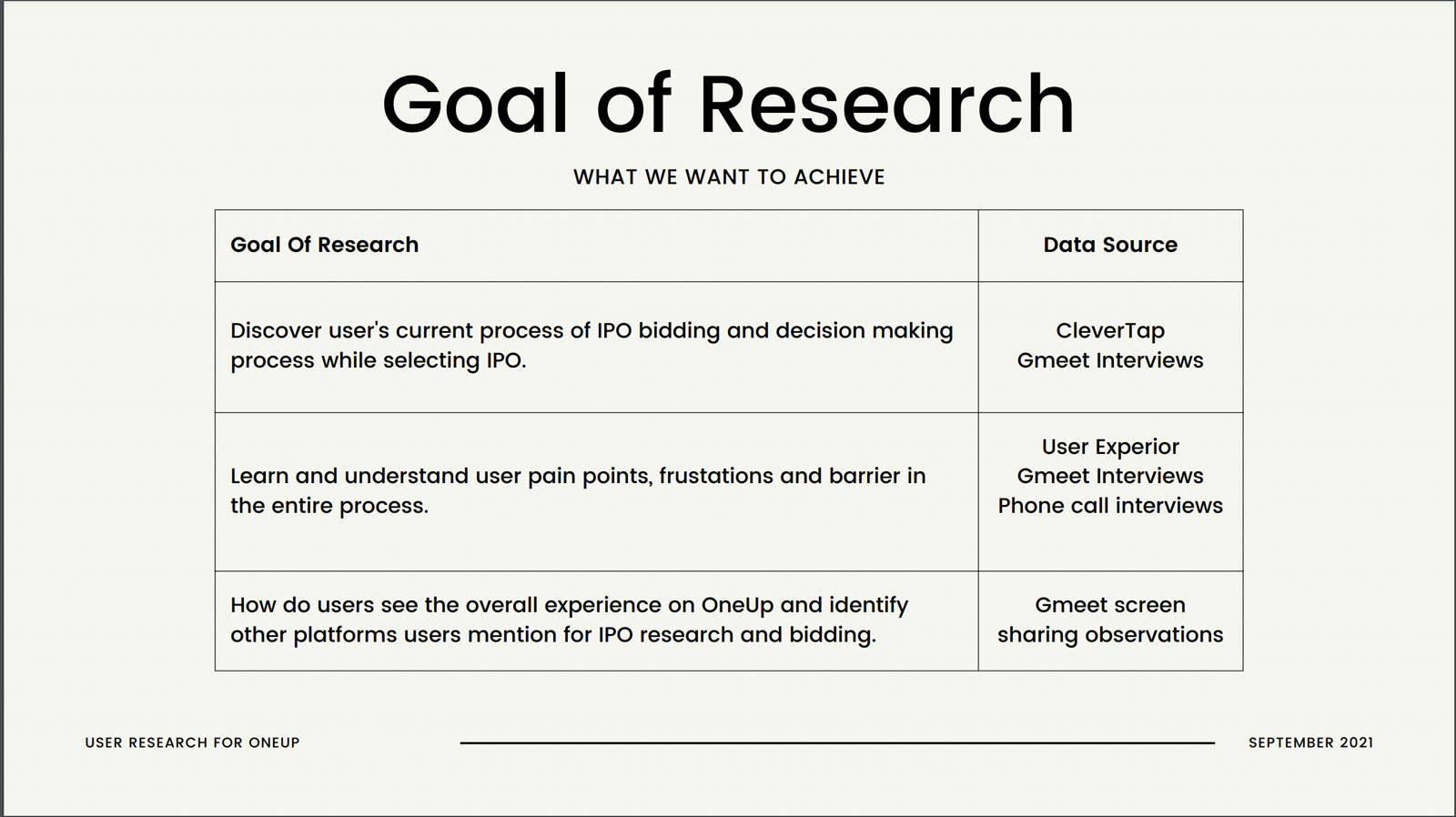
The aim was to find out why people drop off at different steps of IPO bidding, without finishing the application.
- How do people research an IPO and decide whether to bid?
- Which pain points, frustrations and barriers sit in that process?
- How do they experience OneUp, and which other platforms do they turn to?
How the research ran
The funnel showed where people left. The interviews were there to explain why.
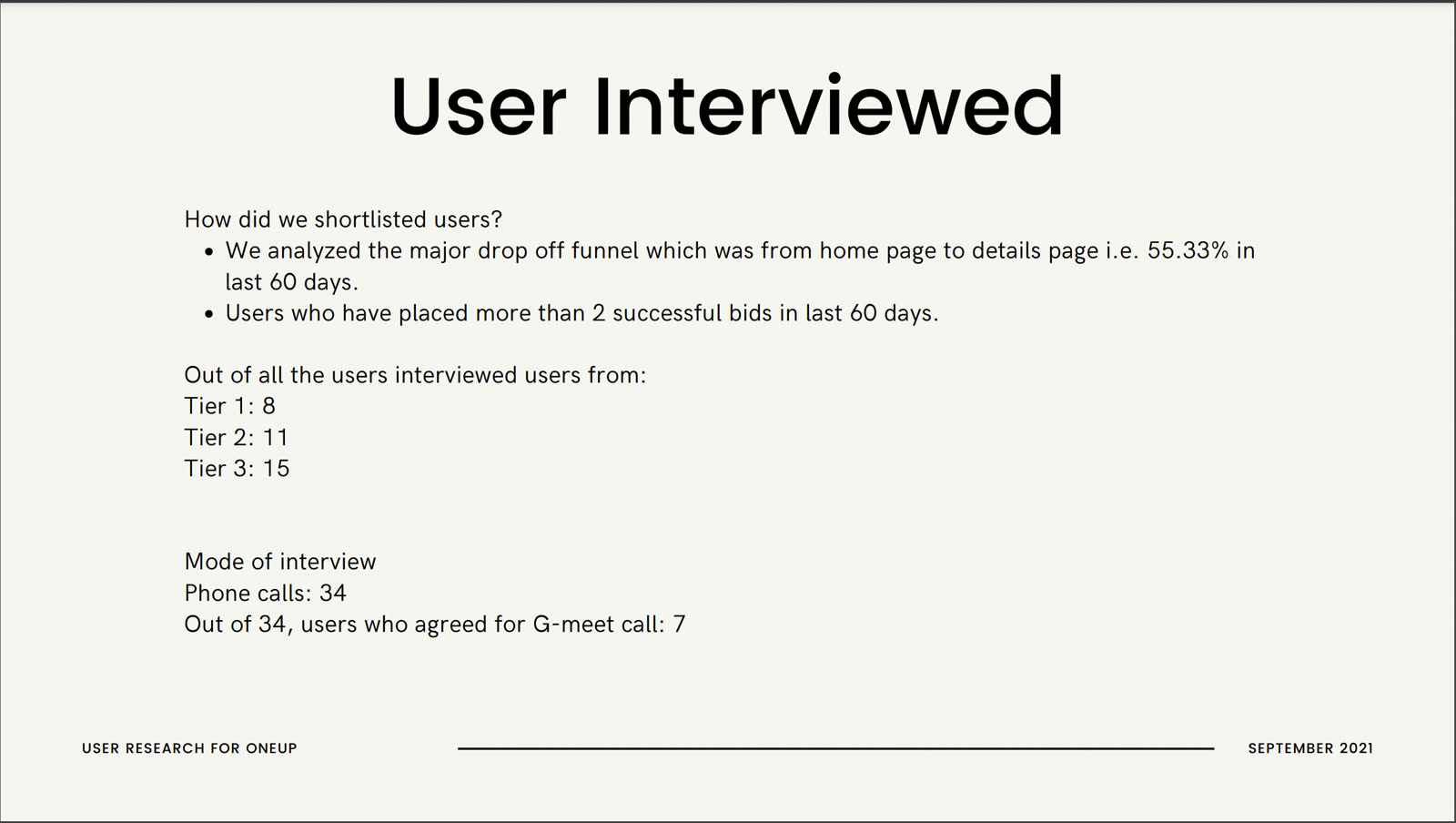
- Funnel review. The biggest drop-off was between the IPO home page and the details page. That, plus people who had placed more than two successful bids in the previous 60 days, shaped who was invited.
- Phone interviews. 34 people were called about how they decide and where they get their information. Of those, 8 were from Tier 1 cities, 11 from Tier 2 and 15 from Tier 3.
- Screen-shared sessions. 7 of the 34 agreed to a video call, where they placed a bid through the IIFL Markets app while talking through what they saw.
The journey we tested
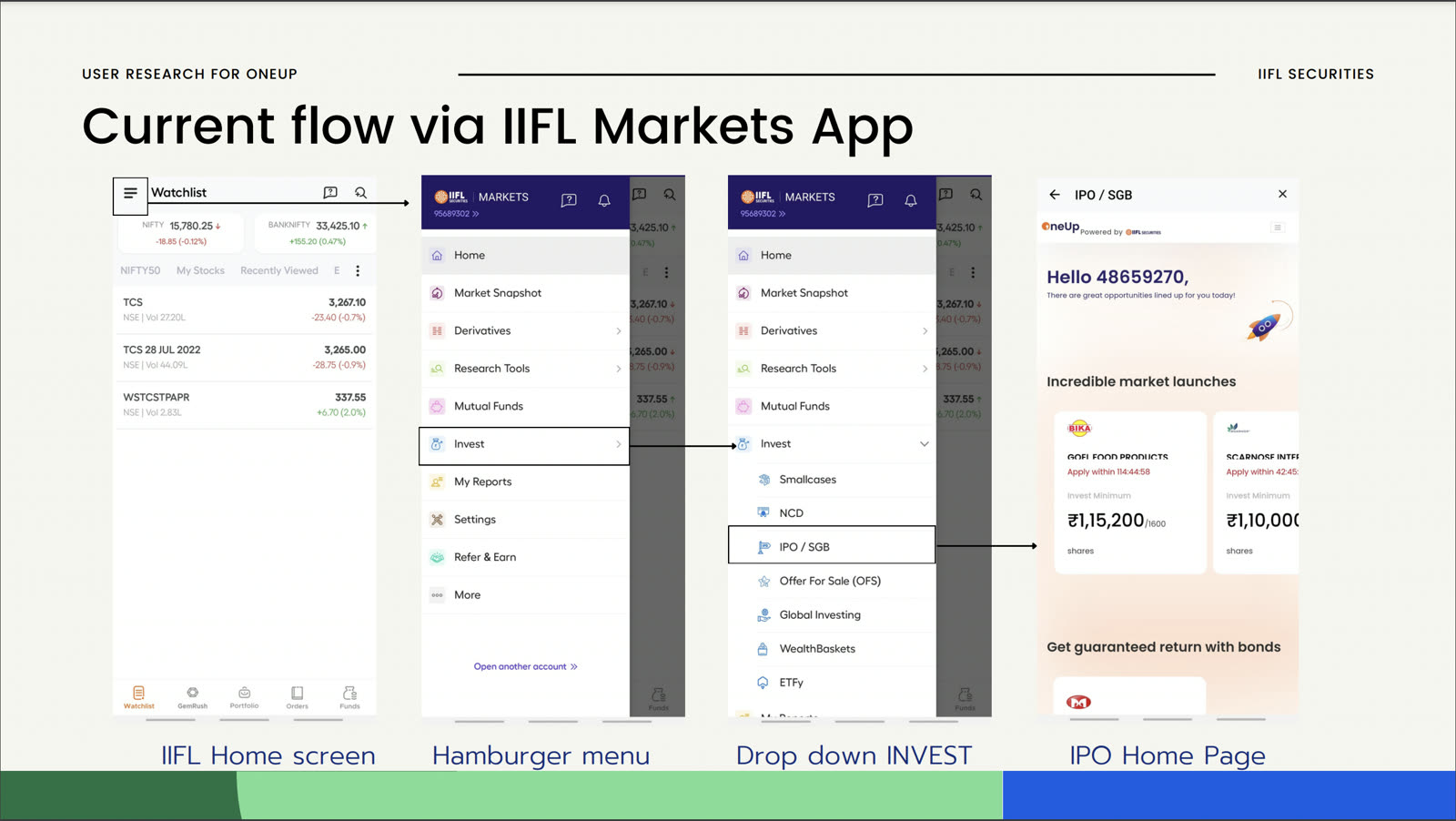
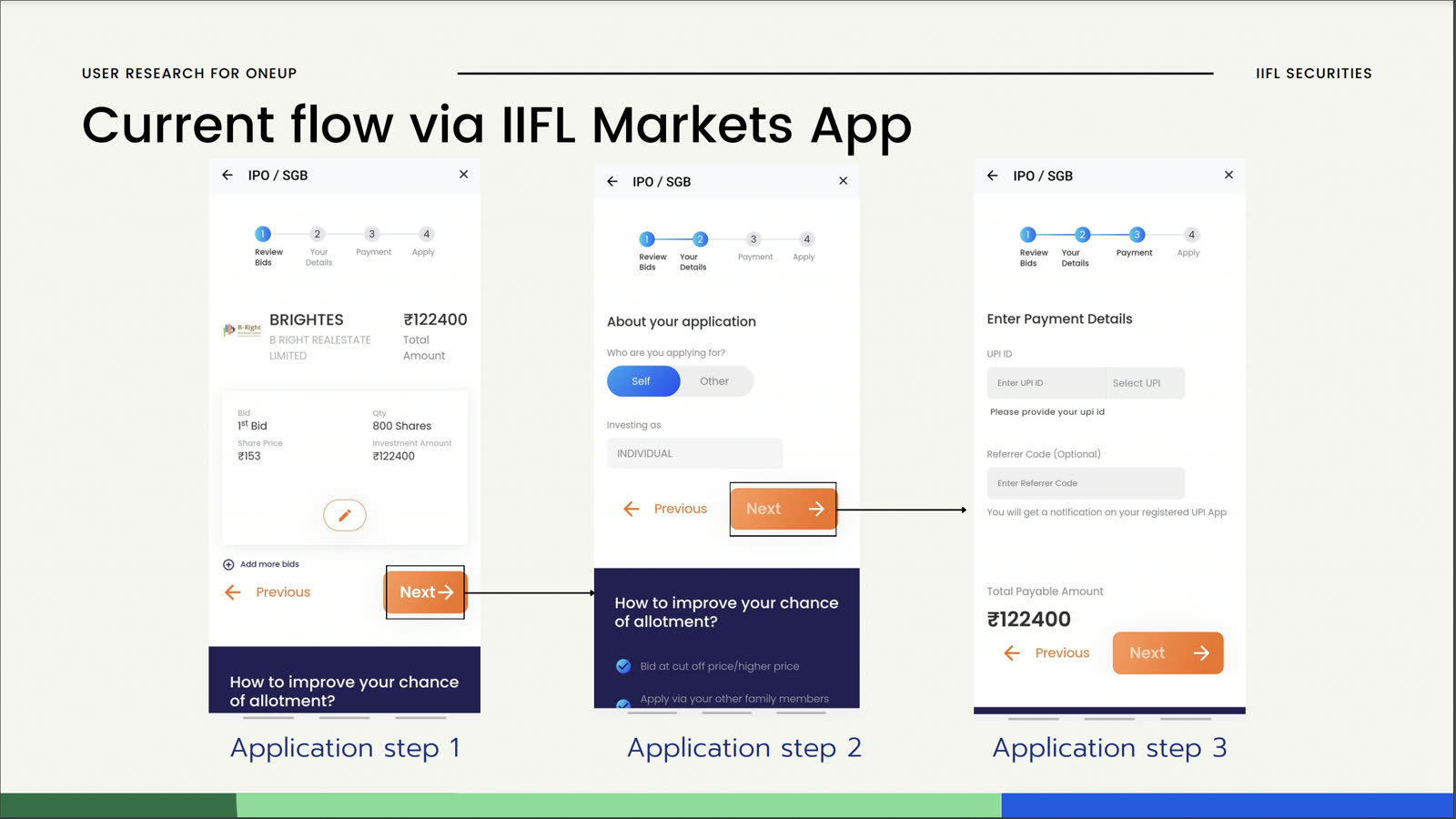
Participants started from the IIFL Markets home screen, opened the menu, found IPO / SGB under Invest, and moved through the OneUp pages and a four-step application.
What we saw
Across the calls and sessions, a few things kept coming up.
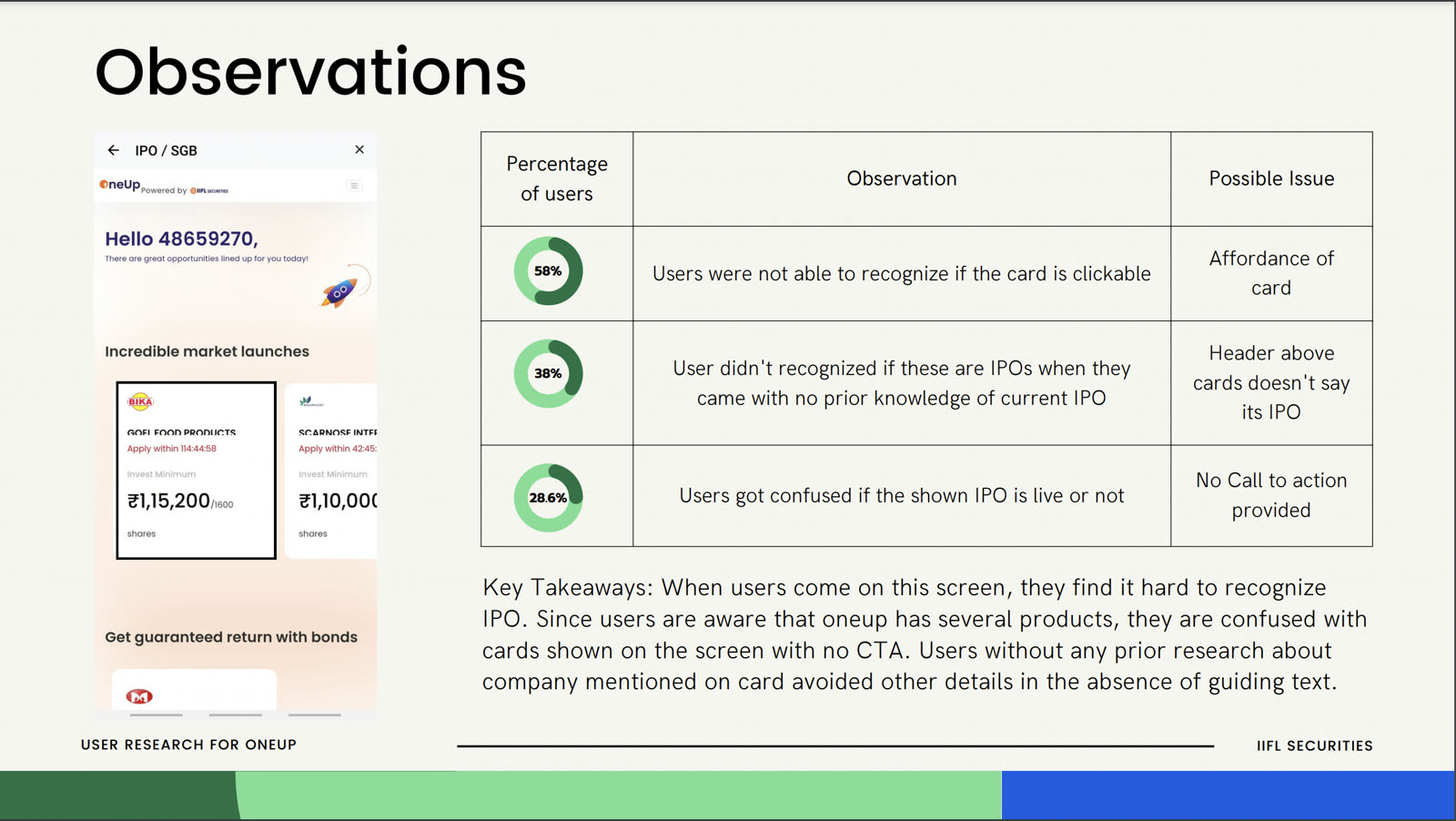
Cards that did not look tappable
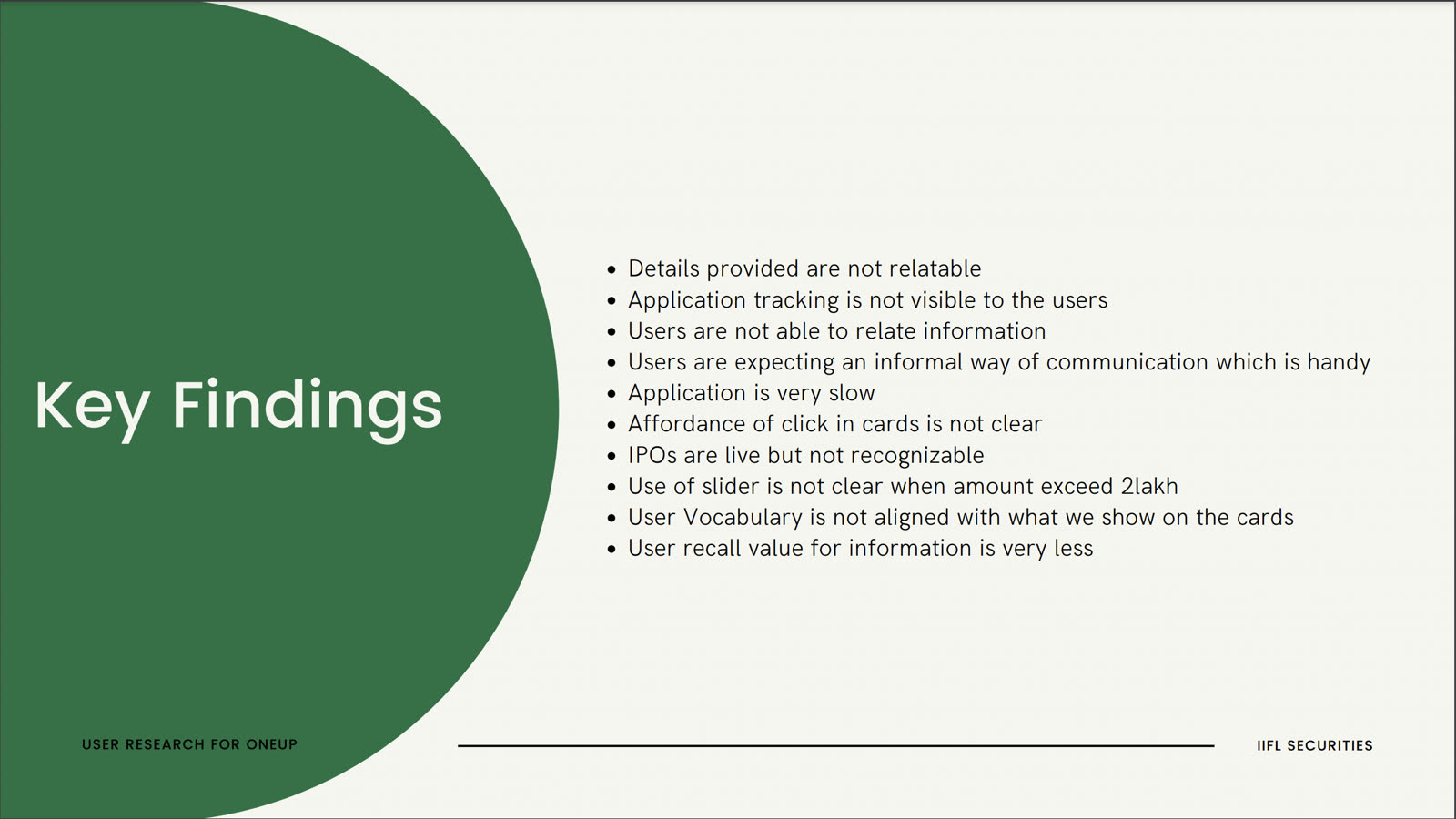
Some people could not tell the IPO cards were clickable, or whether an IPO shown was open for bids.
Words that were not theirs
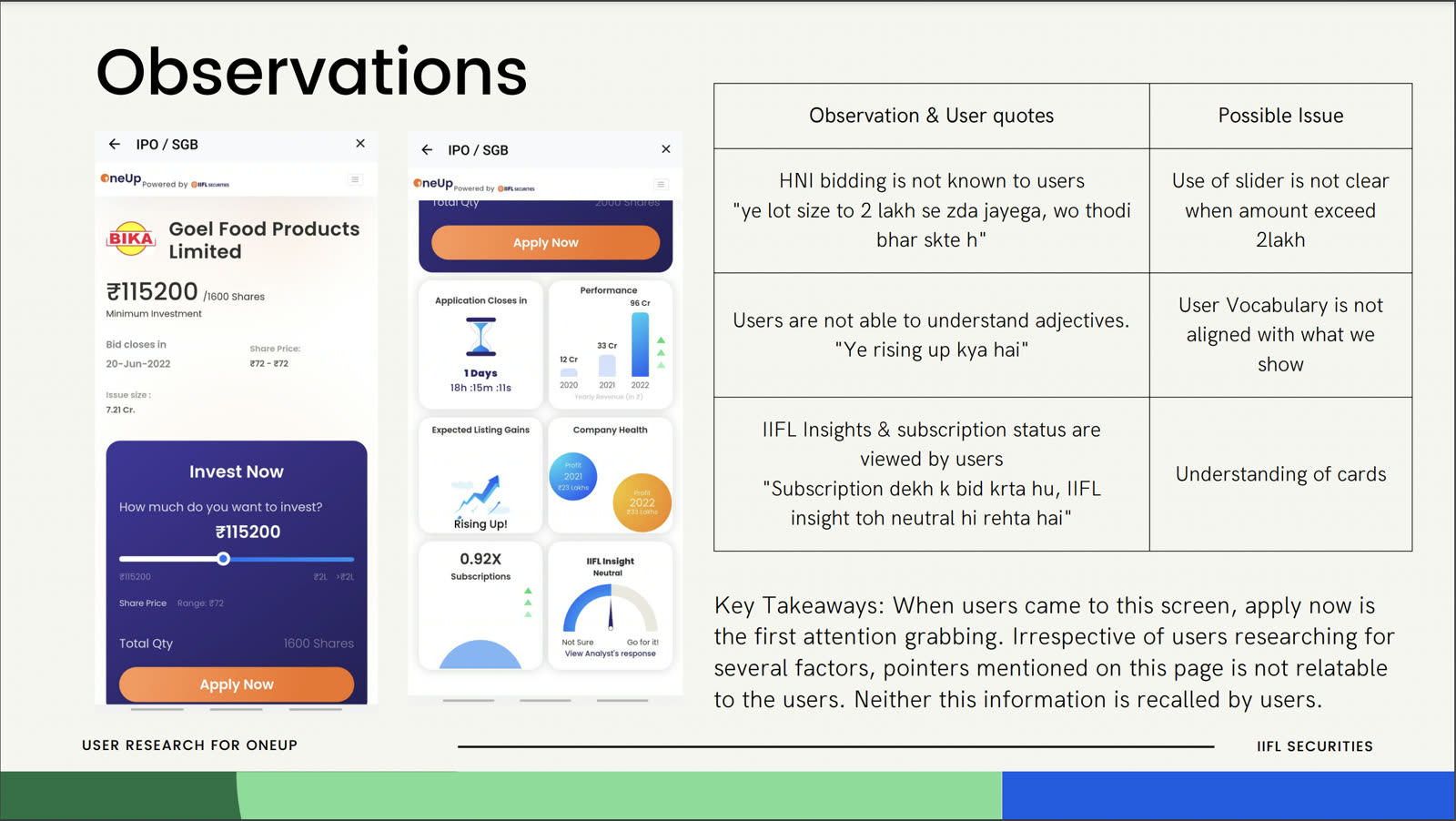
Labels and short descriptions on the cards did not match how participants talked about an IPO.
Information they could not hold on to
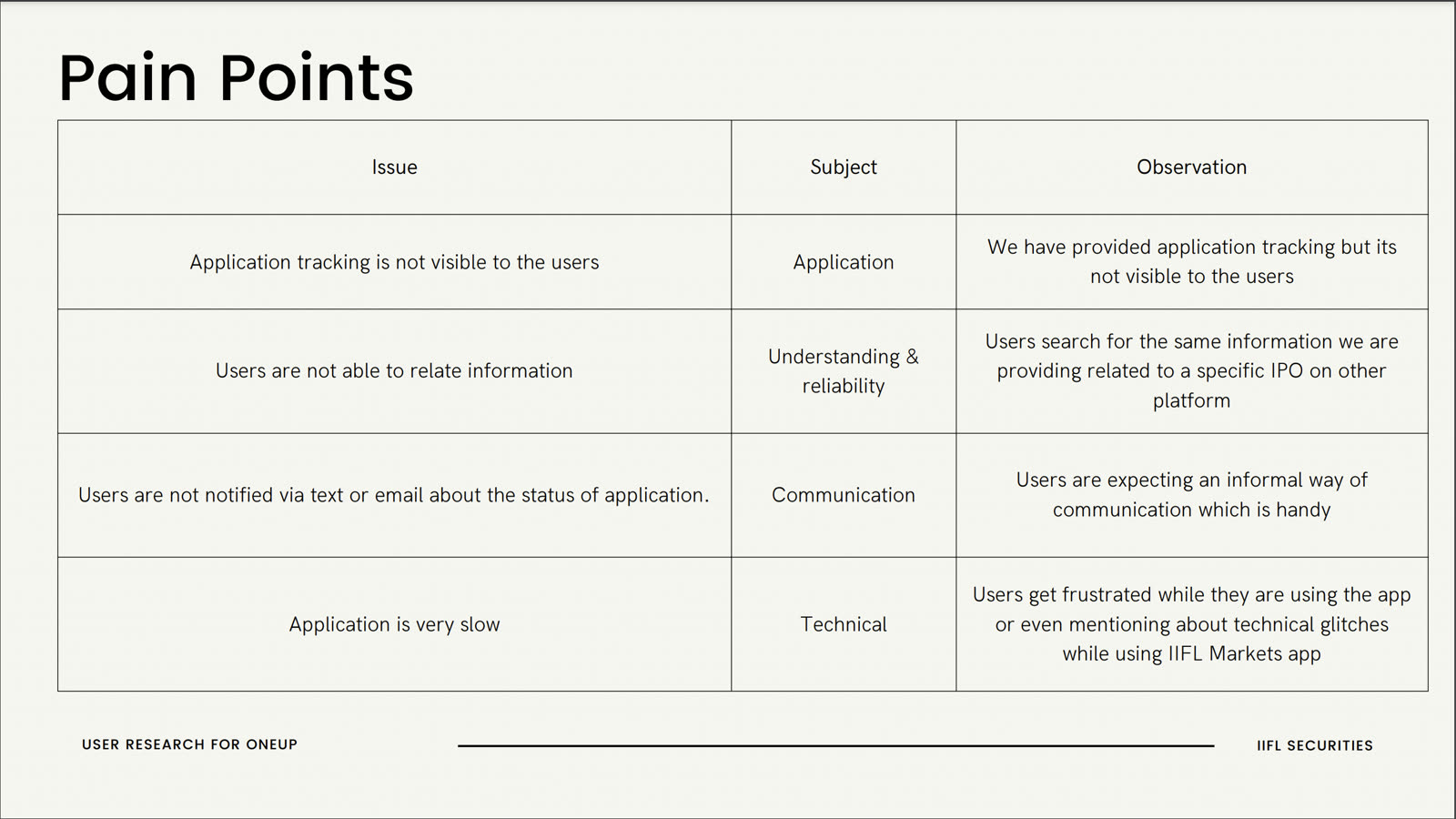
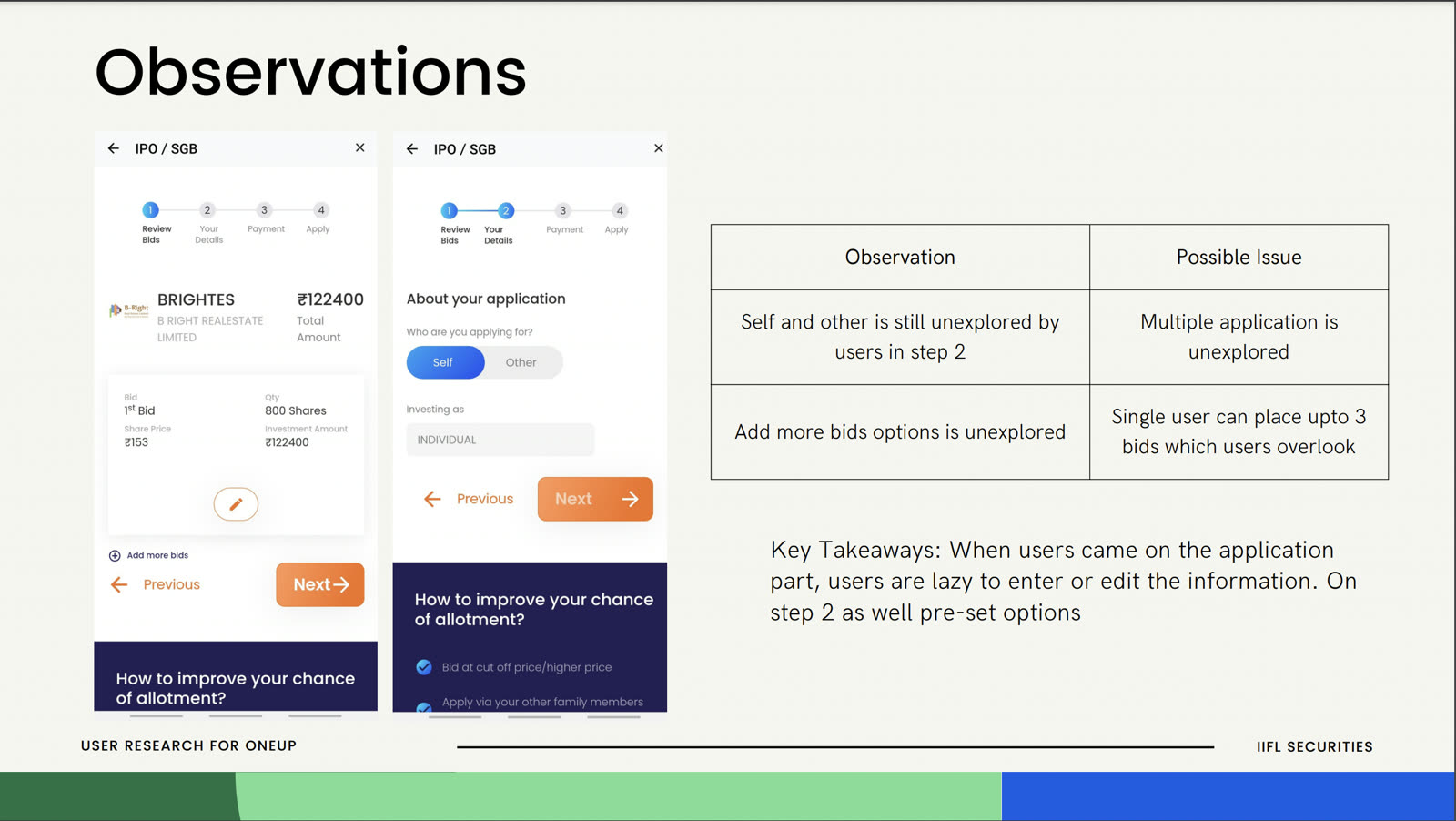
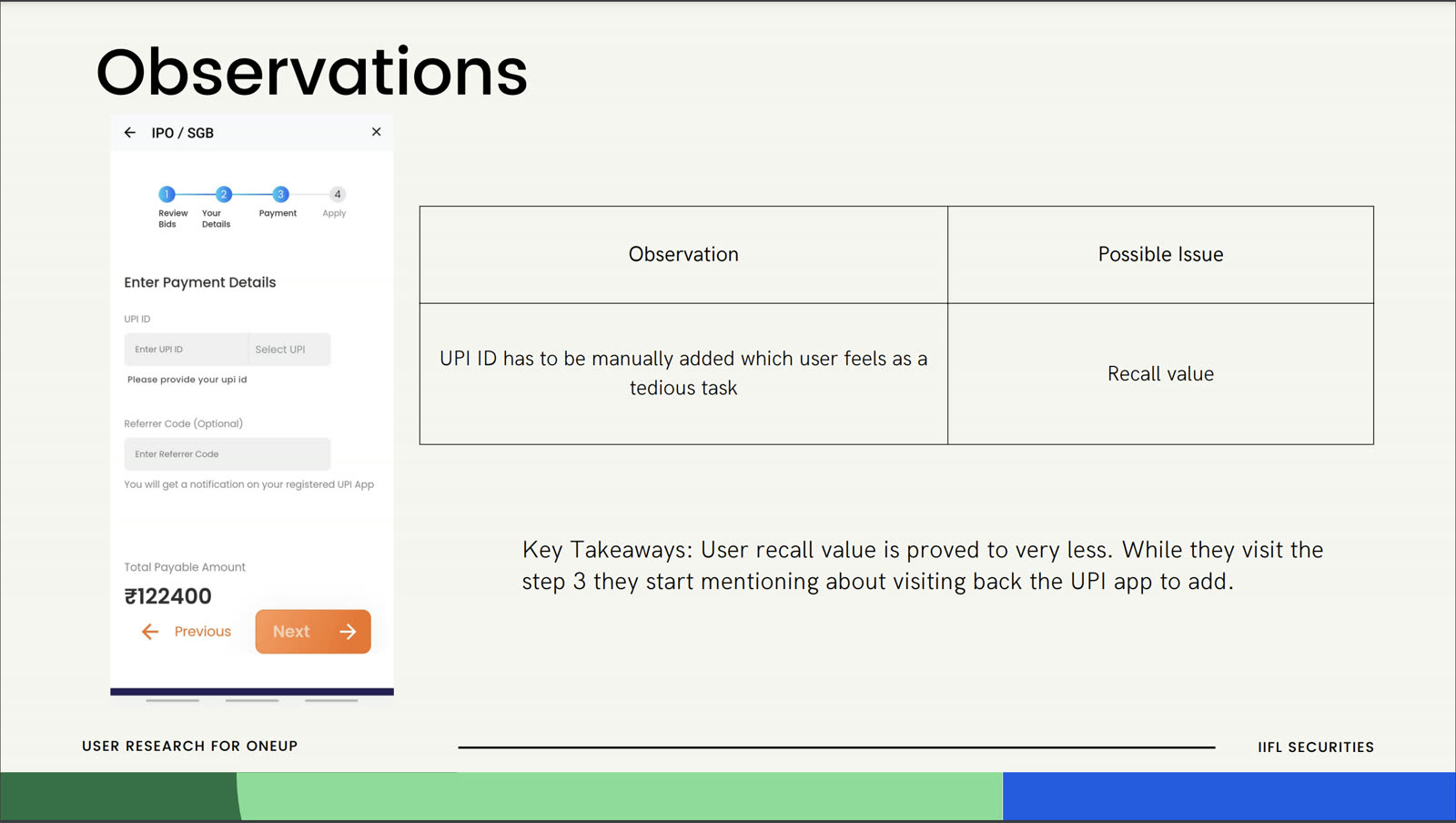
People looked elsewhere for the same details and remembered little of what the page showed. Typing a UPI ID by hand felt tedious.
No sense of what happens next
Application status was hard to see, and participants expected a message by text or email.
What this can't say
- It is qualitative research with a small group. The slide percentages describe these participants, and what each one counts is still to be confirmed.
- It does not show whether bids or applications rose after any change. No outcome is claimed.
- The report records findings. It does not show which changes were built.