What partners need from an advisory platform
A discovery study into how IIFL's partners run and grow their business, and what a platform called AAA would have to do to feel like an adviser instead of a report.
First draft. Written from the research files and resume. Study dates, sample numbers, which directions were adopted and what can be shown publicly still need Shashwita's confirmation. Slides shown are rendered from the Figma file and still need clearance for public use. Remove this note before publishing.
At a glance
- Organisation
- IIFL, financial services
- Product
- AAA, a platform for IIFL's business partners
- Research type
- Foundational discovery
- My role
- Led the research end to end, and developed the personas and user matrices
- Methods
- Stakeholder and partner interviews, contextual enquiry, process analysis, competitor benchmarking, secondary research
- Status
- Research complete; directions proposed
The question
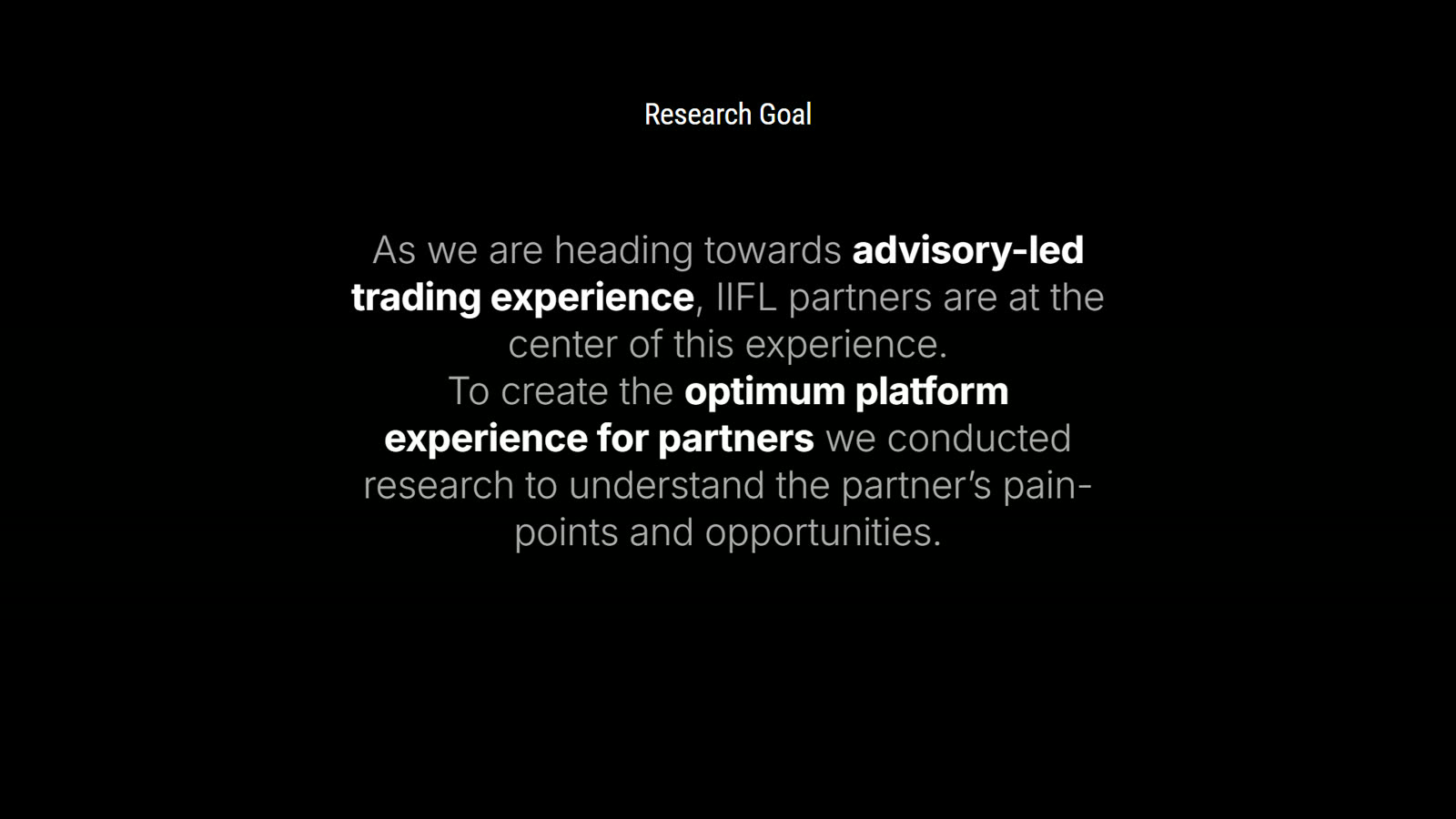
IIFL partners work with their own clients and lean on the platform for brokerage, payouts, client summaries and risk reports. It sits in the middle of their day.
The team needed to understand how partners really work and grow, where the platform helps and where it gets in the way, and what an advisory-led experience would mean in practice. Three questions drove the study:
- How do partners run and grow their business day to day?
- Where do pain points and unmet needs show up?
- What should success look like for the platform, for partners and for the business?
How the research ran
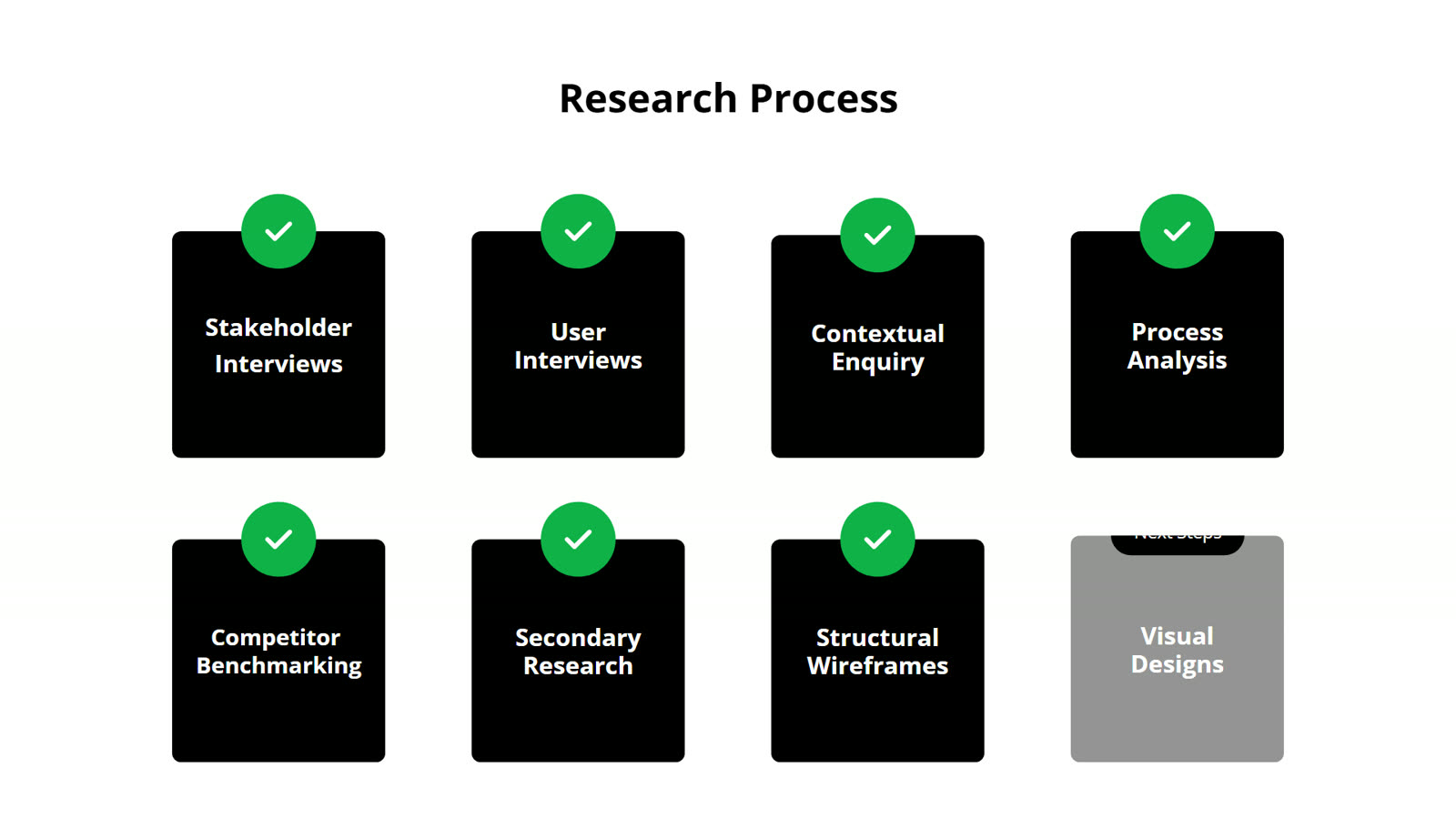
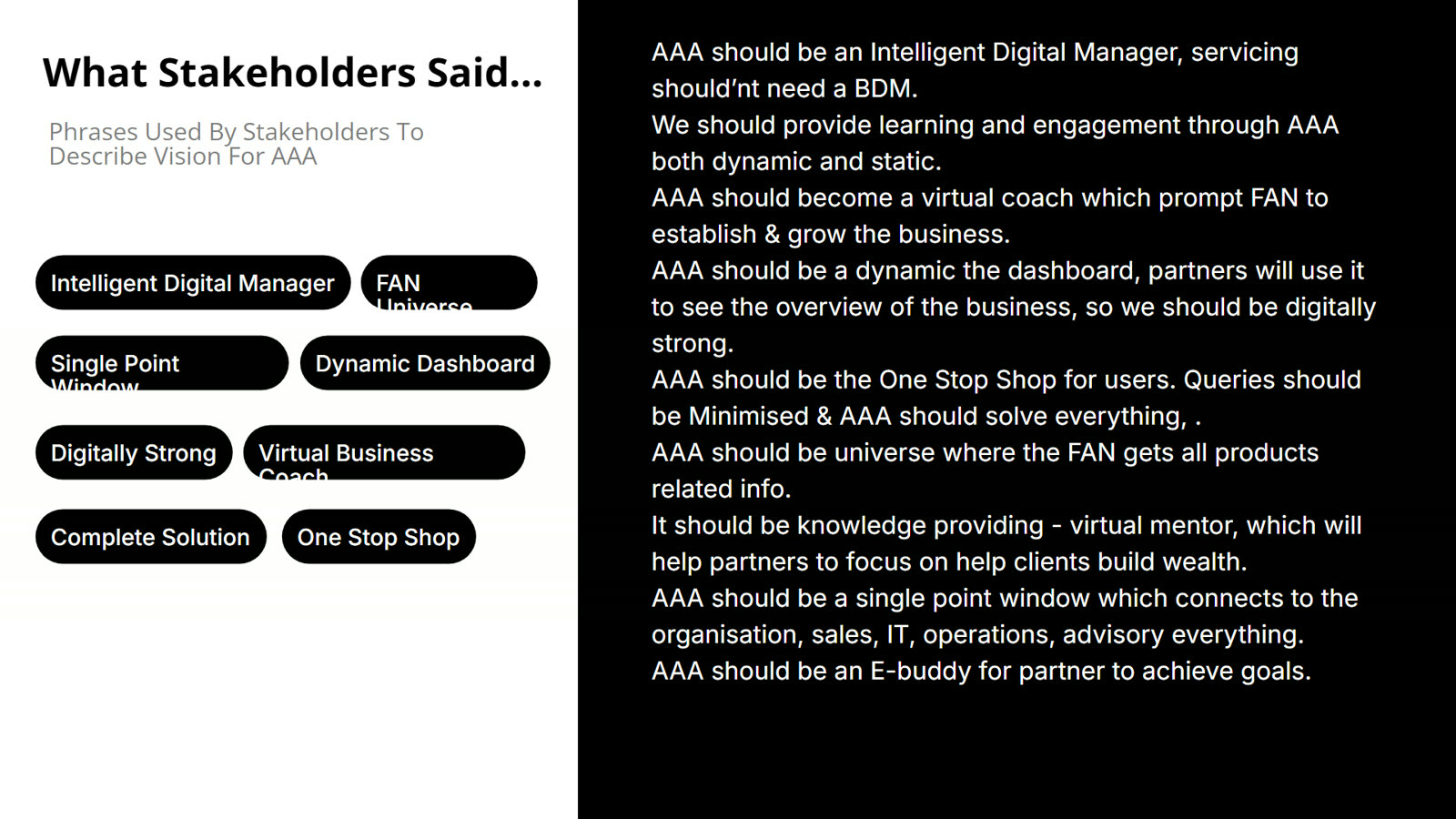
Partners were only one voice. The business, operations and the people supporting partners each described the same system differently, so the study used several lenses on purpose.
- Stakeholder interviews to learn what the business wanted the platform to achieve.
- Partner interviews and survey responses to hear how partners work, what they rely on and where they struggle.
- Contextual enquiry and process analysis to see the work as it happens, not as it is remembered.
- Competitor benchmarking and secondary research to place partners' expectations in a wider market.
Findings were organised with affinity mapping, then reframed as "how might we" questions that product and design could pick up.
What partners told us
The synthesis settled on ten themes. The ones that carried the most weight:
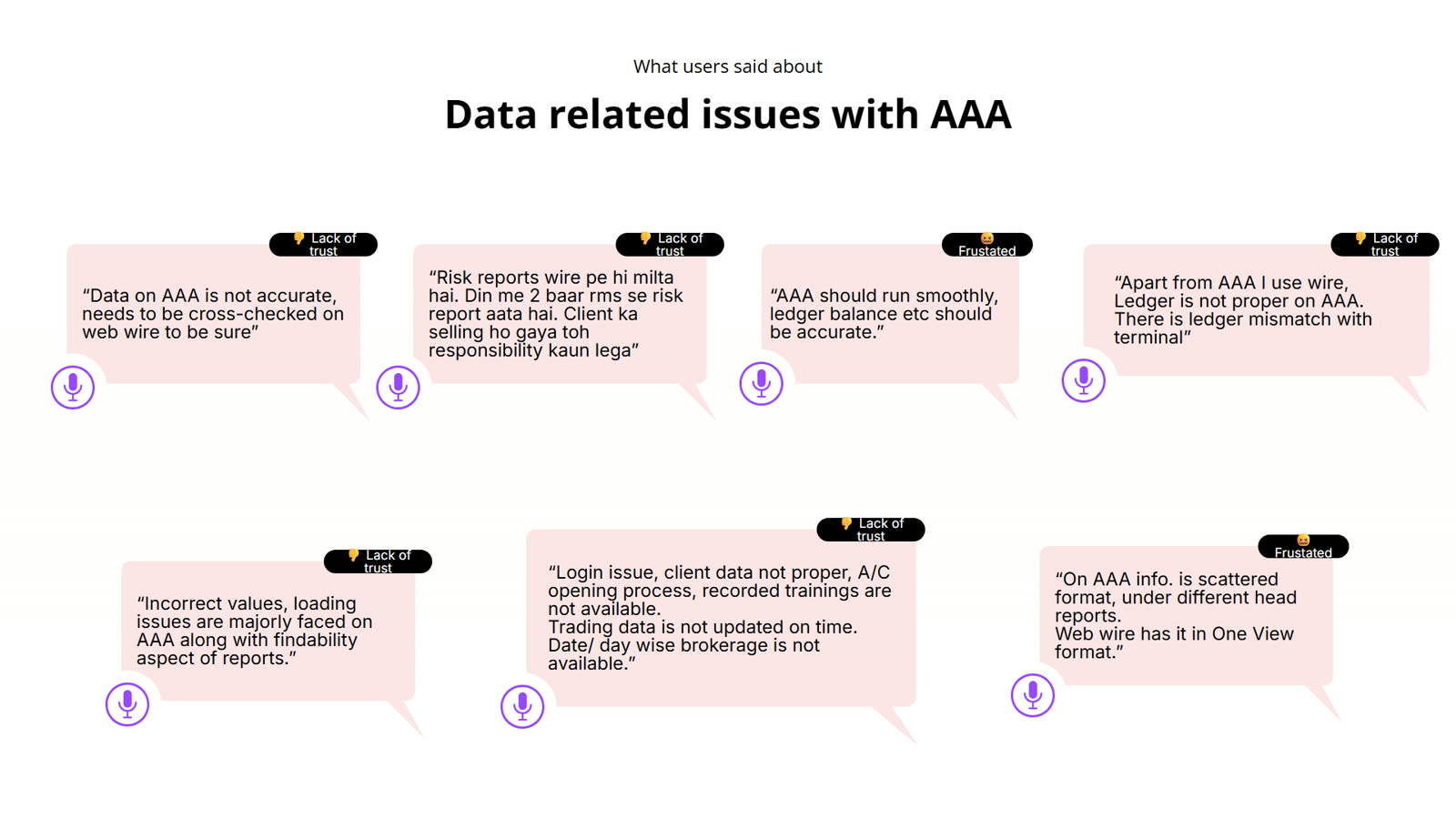
Data they can trust
Partners described information that was hard to reach and not always reliable, which made it hard to advise their own clients.
Advice, not only reports
Partners wanted help deciding what to do next, not just a record of what had happened.
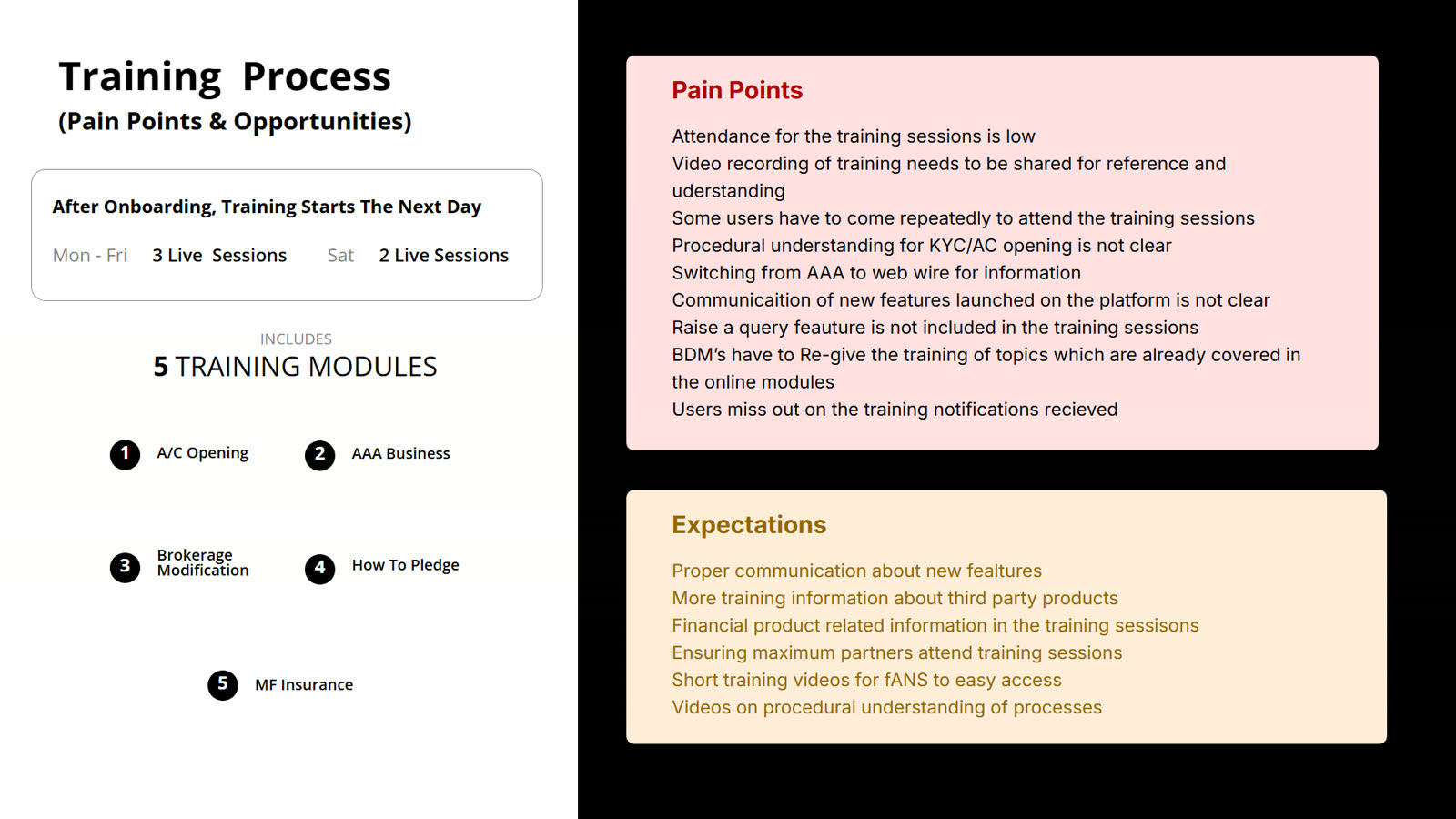
Support and training
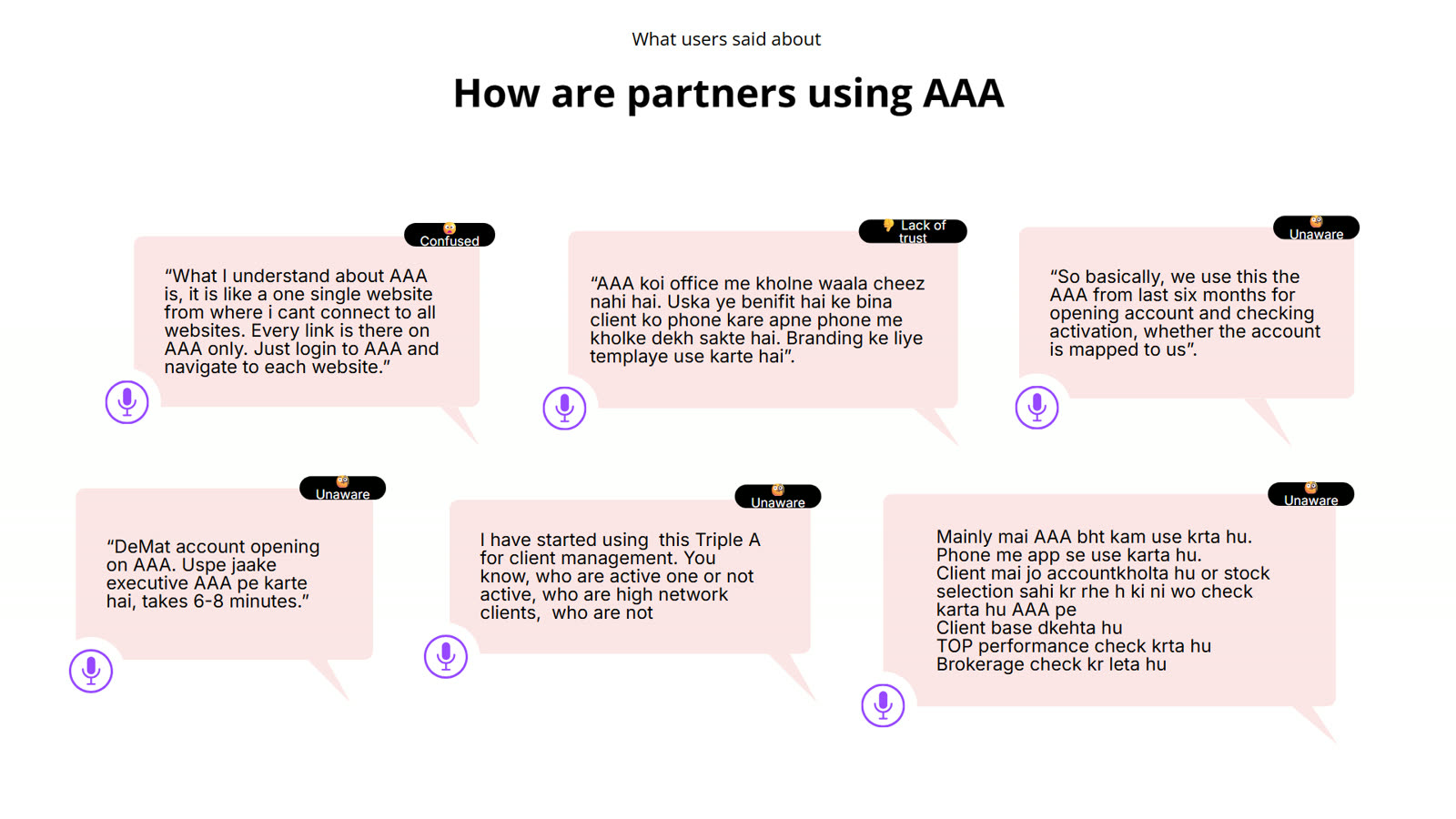
Partners wanted help and training they could rely on, and awareness of existing features was low.
Communication and progress
Partners wanted clearer communication from IIFL and a visible sense of progress, rewards and recognition.
Underneath all four was the same pattern: partners were working across fragmented systems, and the platform did not yet bring that together for them.
Where it pointed
The research turned into four directions the team could explore, each traceable to a theme above:
- An actionable dashboard that surfaces what a partner should do next.
- Help and support inside the product.
- Rewards and recognition that make progress visible.
- Learning modules so partners can pick up features at their own pace.
These are research-backed directions and the design explorations that followed. The research files do not say which were built or released.
What this can't say
- It does not show business impact. There is no measured change in partner activity or revenue here.
- The themes come from interviews and survey responses, so they describe what these partners said, not every partner.
- Directions are proposals. Adoption is not claimed.